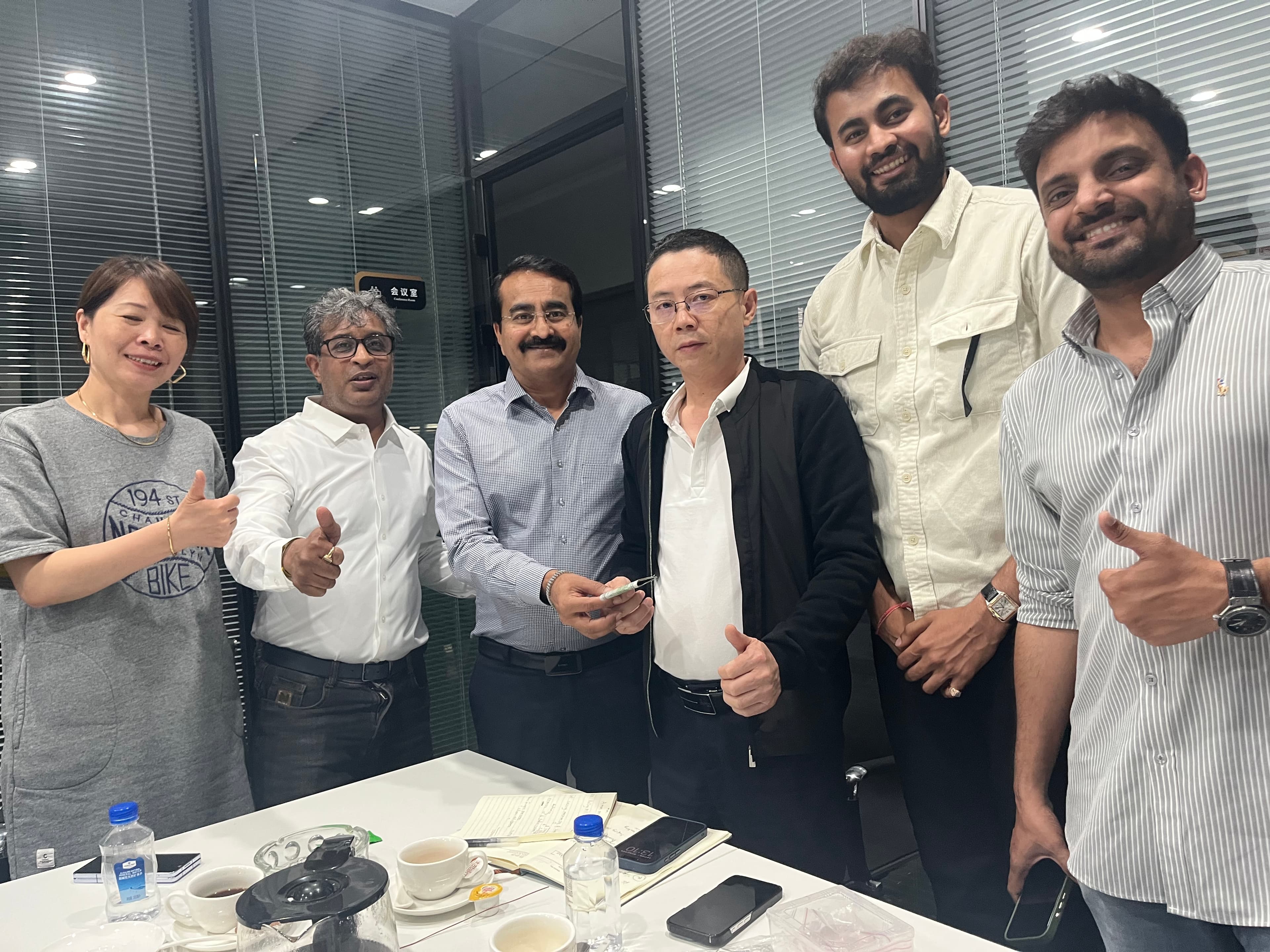
Indian Jewelry Clients Visit Cylanco for On-site Casting Collaboration
Visit Summary
Cylanco welcomed Indian jewelry manufacturing clients for an on-site collaboration session focused on casting workflow stability, equipment matching, and production-ready execution.
This on-site session focused on turning discussion into executable process actions, not just product demonstrations. The objective was to align customer production reality with stable casting workflow design.
Factory Discussion Scope
- Current defect mix and weekly recurrence pattern.
- Shift handoff quality and parameter consistency between operators.
- Equipment selection logic for different order structures.
- Pilot-line KPI design before scale deployment.
Observed Execution Gaps
- Parameter updates were not consistently documented by shift.
- Lot-level defect tags were incomplete, delaying root-cause closure.
- Pilot conclusions were not converted into standard operating cards.
Recommended On-Site Action Plan
- Week 1: lock one product family and one approved process sequence.
- Week 2: enforce unified shift handoff template with defect-coded outcomes.
- Week 3: run controlled validation lots and compare with pre-visit baseline.
- Week 4: publish internal SOP and assign one owner for closure governance.
Pilot KPI Framework
| KPI | Definition | Review Frequency |
|---|---|---|
| First-pass yield | Qualified output without rework | Per shift |
| Rework rate | Lots requiring correction or remake | Per shift |
| Cycle stability | Variance between planned and actual cycle | Daily |
| Defect recurrence | Same defect reappearing after closure | Weekly |
Expected Business Outcome
With disciplined execution, the customer should see more predictable output, lower repeat rework, and faster technical closure on new defect events. The key is operational consistency, not isolated optimization attempts.