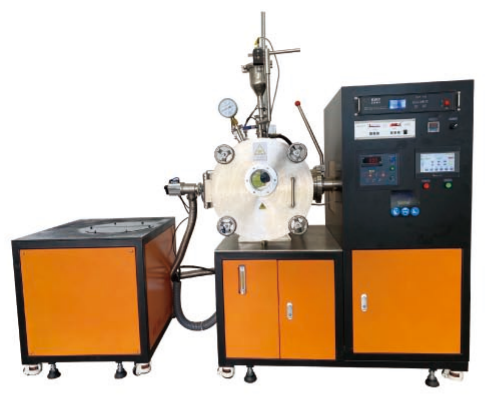
CYLANCO supplies the MX-RLL-002 tilting furnace and a larger integrated melting system. Compare them with a defined alloy, charge, vacuum measurement point and casting handoff.
Define the charge and the next operation
Send the alloy designation, normal and maximum charge mass, feedstock form and required batch frequency. Ask the supplier to identify the crucible for each material. Capacity expressed as a mass applies to the stated metal and crucible. Then describe where the melt goes: a separate mould, a receiving vessel or a downstream forming station. This handoff determines the pouring arrangement and the interfaces to review.
Specify the vacuum reading you need
A pump rating, a cold empty-chamber reading and a reading during a hot loaded cycle describe different conditions. Put the gauge location, unit, process stage and acceptance method on the request for quotation. Agree which measurements can be recorded during the run. If chemistry is critical, specify sampling and analysis after melting alongside the machine data.
Request a configuration you can accept
Use the MX-RLL-002 as a starting point for tilting and pouring a batch. For a line that must coordinate melting with material handling or another process, discuss the CXM-LHVS integrated system and define each interface. Ask CYLANCO, the international equipment brand of Chengyixin, to identify what is included for pumping, cooling, crucibles, receiving tooling, commissioning and the trial charge.