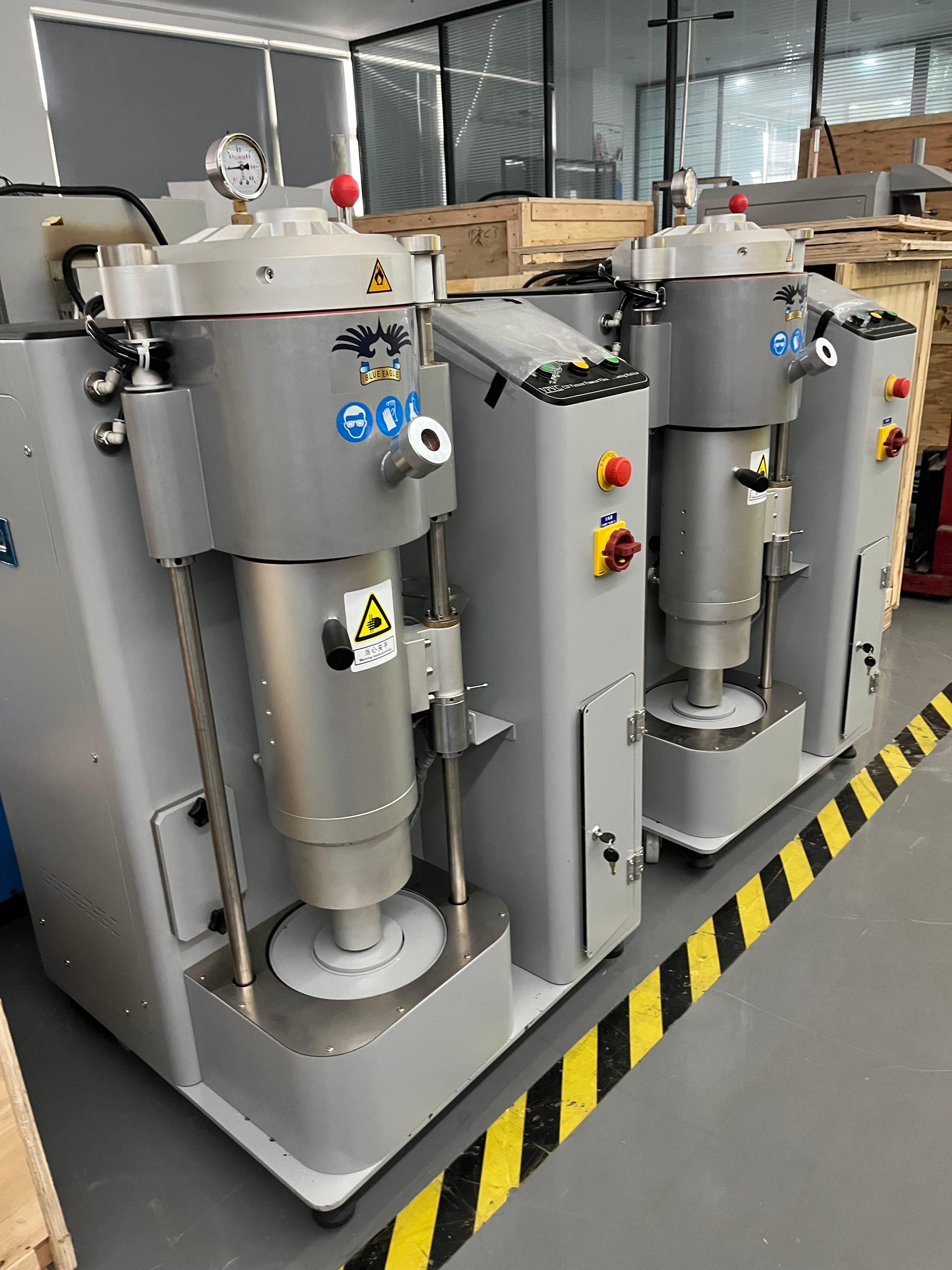
Short answer (conclusion first): If shrinkage porosity keeps showing up at thick-thin junctions in 18K rose gold rings, the root cause is typically solidification sequence mismatch (the heavy section freezes later but loses feed), not a simple “insufficient vacuum” problem. In production, teams can use this sequence to narrow down dominant cause categories during the initial controlled diagnostic cycle by checking four linked variables in order: alloy input consistency, feed path geometry, burnout/flask thermal window, and vacuum-pressure timing on the casting machine.
This is a high-frequency question from sales and after-sales discussions because teams often upgrade equipment first, but keep old tree design and thermal habits. The result is predictable: the machine is capable, but the process still creates isolated hot spots and disconnected feed channels.
Step 1: Confirm metal input before touching machine settings
Before changing vacuum or pressure values, verify that the charge is process-stable:
- Alloy consistency: Keep fresh grain / return ratio controlled by internal SOP. Mixed unknown return sources increase local composition drift and widen freezing range.
- Clean melt discipline: Remove contaminated scrap and avoid repeated over-holding at high temperature.
- Target superheat: For 18K rose gold, avoid “extra safety superheat.” Excess superheat delays shell-side freezing and worsens thick-thin feeding conflict.
Checkpoint: If porosity morphology is concentrated near section transitions, and not random across all surfaces, continue to feed-path and thermal sequence checks first.
Step 2: Fix feed-path geometry at the thick-thin transition
In many failed trees, the gate freezes too early relative to the local hot spot in the thicker zone. That creates an isolated liquid pocket and final shrinkage cavity. Practical corrections:
- Shorten thermal distance: Reduce unnecessary gate length from sprue to the problematic section.
- Increase effective feed cross-section where needed: Do not oversize globally; reinforce only at the junction-feeding route.
- Smooth transitions: Avoid abrupt thickness jumps in wax where possible; use gradual transitions to reduce local thermal shock.
- Re-balance tree loading: Overcrowded trees with mixed mass parts often create uneven fill and freeze patterns.
Common mistake: Raising machine pressure while keeping a feed choke in geometry. Pressure cannot compensate for a path that has already frozen.
Step 3: Align burnout and flask temperature with actual section mass
For thick-thin ring structures, “one fixed flask recipe for all jobs” is usually the hidden defect amplifier. Use a mass-aware thermal window:
- Ensure burnout completion and mold cavity cleanliness before casting.
- Match flask exit temperature to the section mix on the tree, not only to alloy family.
- Avoid excessive flask temperature for long periods, which can extend feeding demand while degrading directional freeze behavior.
Quick diagnostic: If fill is complete but junction shrinkage remains, your issue is often feed-freeze timing, not underfill.
Step 4: Lock vacuum-pressure timing (not just peak value)
On vacuum pressure systems (for example, production setups using Cylanco casting platforms such as CXM-C20), teams often optimize only final pressure number. In reality, timing alignment matters more:
- Vacuum phase: Stable evacuation before pour reduces gas entrapment risk.
- Pressure phase: Apply pressure with repeatable timing relative to pour completion and early freeze stage.
- Hold phase: Keep hold duration sufficient for directional feed completion at critical junctions.
When these phases drift shift-to-shift, defect rate swings even if “setpoints look the same.”
Step 5: Run a shift-level validation loop (A/B with evidence)
Do not validate by memory. Run a compact A/B loop across one shift:
- Freeze current baseline and collect defect photos by position.
- Apply only one correction bundle (geometry + thermal + timing), not random multi-edits.
- Track first-pass yield, defect location frequency, and rework minutes per batch.
- Keep the improved window for at least two consecutive batches before declaring stable.
Expected operational result: This workflow is designed to narrow the dominant cause category during controlled early-stage diagnostics, then move to controlled batch validation before locking a long-term window. Diagnosis speed depends on product mix and data quality.
Internal references for implementation
- 18K Gold Casting Defects: Fast Root-Cause Workflow for Porosity Control and Stable First-Pass Yield
- Case Study: Emerald (India) standardized casting handoffs with CXM-C20
- Cylanco FAQ: process and equipment selection basics
- CXM-C20 product page
Shift-level checklist for supervisors
To keep troubleshooting reproducible, supervisors can use a 10-minute checkpoint card at each pour cycle: confirm batch identity, tree type, flask temperature at exit, melt hold time, vacuum start timing, pressure start timing, and defect photo tagging by location. This simple discipline prevents “parameter drift by memory” and makes handovers between operators much more consistent.
What to standardize after recovery
Once yield stabilizes, convert this temporary fix into a repeatable SOP:
- Define approved gate patterns by product family (especially for thick-thin rings and pendants).
- Document thermal windows by section mass class.
- Store vacuum-pressure timing templates by alloy group.
- Train shift leads to audit sequence compliance, not just machine setpoints.
That is the difference between a temporary correction and durable process capability.
Sources and verification basis: chengyixin.com.cn technical process materials, standard lost-wax casting control principles, and anonymized Cylanco after-sales troubleshooting logs on 18K jewelry casting defects.